
Sep 29, 2026How to distinguish between different types of jadeite:
How to distinguish between different types of jadeite
A guide to distinguishing between different types of jadeite and avoiding common pitfalls
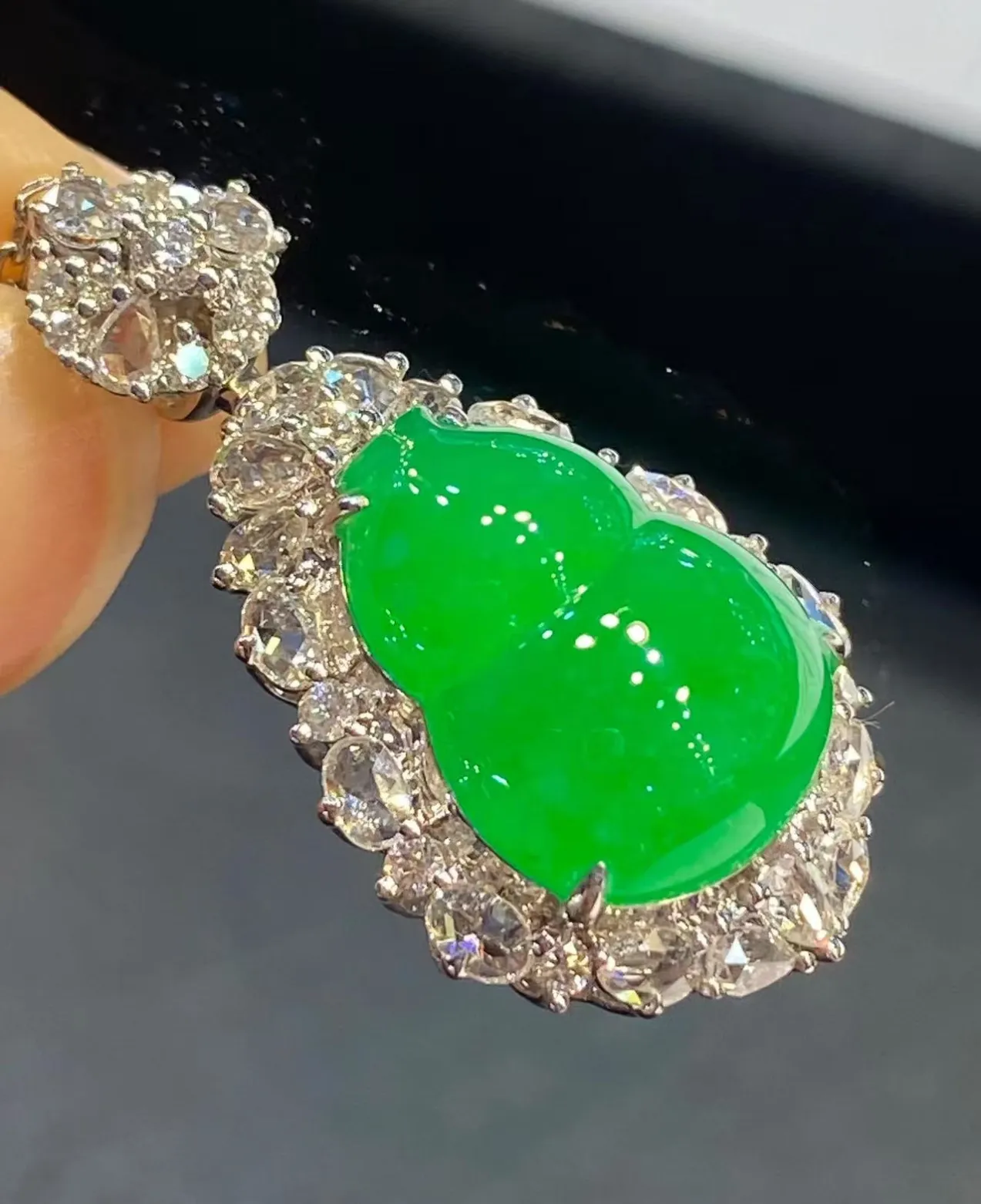
Several common methods for distinguishing jadeite:
Grade of the jadeite: I. A/B/C/B+C grades (the most crucial factor, distinguishing between natural and artificially treated jadeite)
- Grade A jadeite (natural jadeite, retains its value)
- Grade B jadeite (acid-treated and resin-filled; no collectible value) – Impurities are removed using strong acid, and the interior is filled with resin, destroying its structure. Lustre: Resinous sheen; dull and lacklustre. Magnifying glass: Net-like acid-etched patterns (spider’s web-like markings), a typical characteristic of B-grade jadeite. Ultraviolet light: Many pieces exhibit blue-white fluorescence (new anti-fluorescent B-grade jadeite can evade detection under UV light; UV examination alone is not sufficient for identification). Tapping: The sound is dull and muffled, with no echo.
- Grade C jadeite (artificially dyed jadeite): Dye is injected into the fissures of the jadeite. When examined under a light: the dye is entirely concentrated within the fissures, with no natural colour gradation within the stone. Colour: The colour sits on the surface, accumulating in a mesh-like pattern along the fissures; it appears lifeless, unnaturally vivid and artificial, with no colour roots.
- Grade B+C jadeite (acid-etched and resin-injected + dyed; the most common counterfeit on the market) exhibits both the acid-etched mesh pattern of Grade B jadeite and the mesh-like dyeing of Grade C jadeite, making it the most prevalent type of imitation. ! Glass, quartzite and ‘water foam’ are not jadeite at all; they are imitations. Their density is noticeably lower, and their structure is completely inappropriate.
II.Classification by ‘Zong’ and ‘Shui’ (Experts assess the ‘Zong’ by examining the fineness and transparency of the crystals, ranked from lowest to highest)
‘Zong’ = the coarseness and density of the crystals; ‘Shui’ = transparency and lustrous quality
- ‘Dou Zong’: Coarse crystal grains, appearing as individual ‘beans’ to the naked eye; opaque with a dry lustre; relatively low in price
- Glutinous Rice Variety: Resembles cooked glutinous rice porridge; slightly translucent with a warm, moist base and diffused crystals; the most commonly traded variety on the market. Fine Glutinous Rice and Glutinous Rice-like: A higher grade within the Glutinous Rice Variety, with a finer, more refined base. 3. Glutinous-Ice Variety: A transition from the Glutinous Variety to the Ice Variety; hazy and semi-translucent, with an icy feel, though the base exhibits a slight cloudiness and a ‘cotton-like’ texture. 4. Ice Variety: Resembles an ice cube; semi-transparent, with fine crystals invisible to the naked eye, minimal ‘cotton’ inclusions, and a clear, bright lustre; further subdivided into ‘True Ice’ and ‘High Ice’ (the latter approaching the Glass Variety). Extremely rare; collector’s grade
- Glass-like: The pinnacle of jadeite, resembling transparent glass; the crystals are extremely fine, with no visible structure to the naked eye; often exhibits a fluorescent sheen; production volume
III. Distinguishing Jadeite Colours
Common colour groups: green, purple, yellow jadeite, red jadeite, ‘blue water’, ‘clear water’, ‘oily green’, ‘white ice’
Green sub-categories: bean green, oily green, apple green, bright green, imperial green (pure, deep, even and vibrant in colour; the most valuable) Characteristics of natural colour: the colour varies in depth and is rooted within the jade (colour root); In dyed ‘C-grade’ jadeite, the colour sits on the surface.
Simple, quick self-inspection for home use (for preliminary screening only; cannot replace a certificate)
- Weigh it: Jadeite has a density of around 3.33; for the same size, it feels much heavier than glass or chalcedony
- Examine the surface with a magnifying glass: Using a 30–60x magnifying glass, the presence of spider-web-like acid-etched patterns indicates Grade B or C jadeite
- Observe the lustre under natural light: Grade A jadeite exhibits a sharp, glass-like lustre; Grade B or C jadeite has a hazy, resinous lustre
- Use a UV light for assistance: A 365nm UV torch; extensive blue fluorescence strongly suggests resin injection (new counterfeits may show no fluorescence)
- Listen to the sound: suspend the piece on a fine thread and tap it gently with an agate stick; A-grade produces a crisp sound; B/C-grade sounds dull and muffled IV. How to examine certificates Genuine certificates: if the appraisal conclusion states [Jadeite] = A-grade; if it states Jadeite (filled/dyed) = B/C-grade. Certificates must bear the CMA, CAL and CNAS logos, and the original image can be verified by scanning the QR code on the official website.